With the support of UMAG, UCSC, the State CFT and international cooperation, the far south presents the first advances in teaching tools and curriculum design for the clean energy industry; a key debate that will be part of the main themes of the Hyvolution 2026 Congress.
The foundations of the energy transition are being built in classrooms and laboratories where those who will lead the future operations are being trained. With this conviction, the Magallanes Region took a decisive step in consolidating its training ecosystem for renewable hydrogen, following the public presentation of the results of two ambitious human capital programs driven by the University of Magallanes (UMAG), the Catholic University of the Holy Conception (UCSC), and the Magallanes State Technical Training Center, in a strategic alliance supported by the Ministry of Energy and Spanish-Chilean international cooperation through AGCID and AECID.
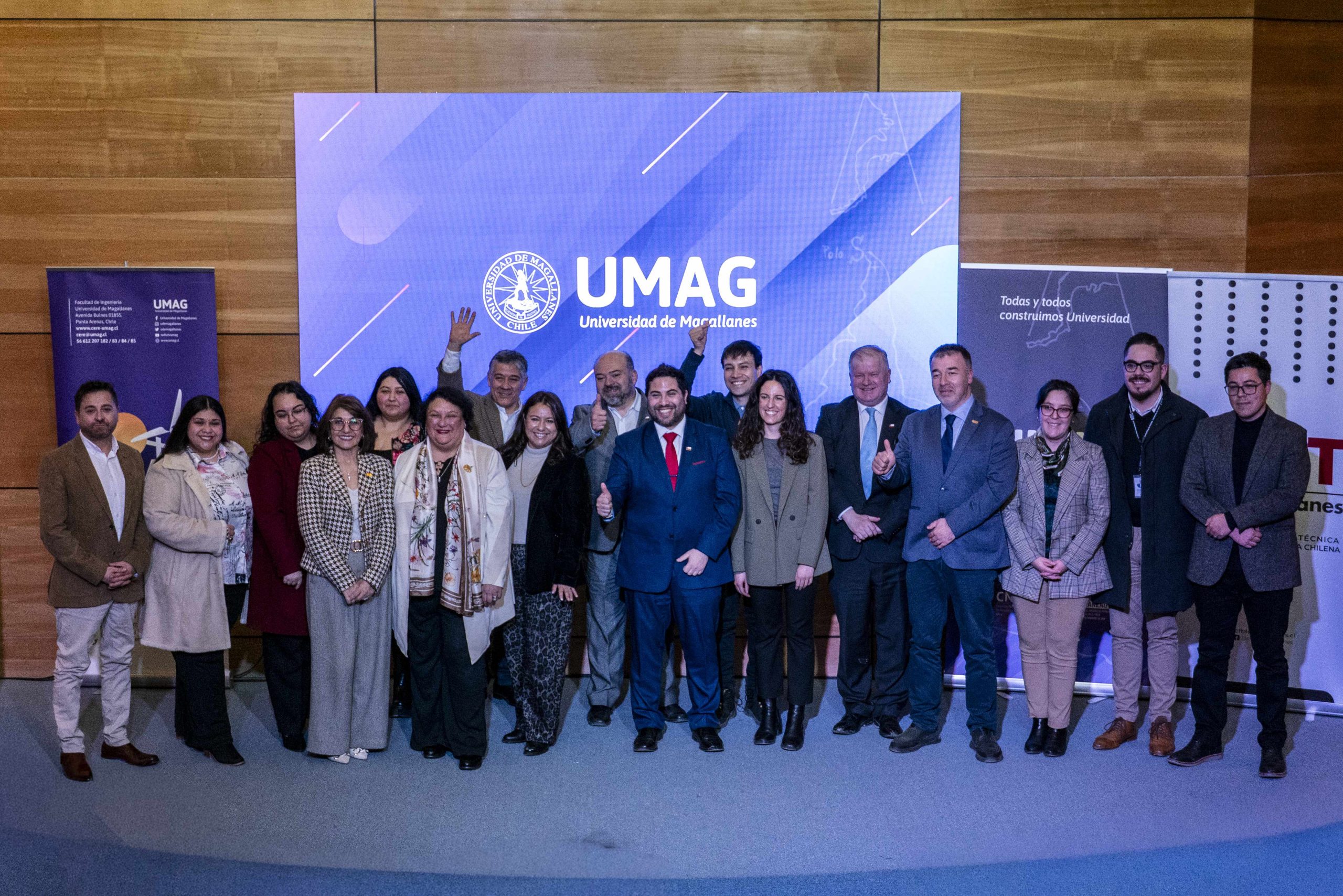
National authorities, academics, and representatives from the productive sector gathered at the Ernesto Livacic Auditorium at UMAG to witness how the region is preparing its educational infrastructure for the future of green hydrogen.
Two complementary initiatives were presented: first, the development of educational tools, operating manuals, and specialized audiovisual materials by the Center for Energy Resources Studies (CERE-UMAG), focused on the safety and maintenance of electrolyzers, fuel cells, and storage systems; and second, a rigorous diagnostic study and curriculum design led by the Catholic University of the Holy Conception (UCSC) and the Magallanes State Technical Training Center (CFT Estatal de Magallanes) to structure technical programs aligned with the real demand that power generation plants and their related industries will require.
During the event, institutional representatives emphasized the strategic scope of this training initiative. The Undersecretary of the Ministry of Energy, Hugo Briones, highlighted in a virtual address the importance of training professionals to the highest standards to lead the energy transition, stating, “We are confident that this effort will allow us to continue training more and better professionals prepared to lead the development of one of the fuels destined to play a fundamental role in the energy transition.” Along the same lines, the Regional Secretary of Energy in Magallanes, Marco Antonio Pinto, emphasized that “we have the opportunity in Magallanes to grow in the energy sector, but with a view to becoming self-sustaining and powerful at the national and international levels because we believe in change.”
From the perspective of the Spanish Cooperation Agency (AECID), Carmen Alonso emphasized that the true value lies in the permanent capabilities that are established in the region, building strong networks between academia, the public sector, and businesses to respond dynamically to the demand for technicians and professionals.
This training effort also reflects a long-term vision that seeks to transcend the fluctuations inherent in emerging markets. As stated by the Rector of UMAG, Dr. José Maripani, “we understood from the very beginning that one of our main contributions should be the training of the people who will make this new industry possible”. The university official emphasized that, while the sector is going through a period of adjustments and challenges, “major energy transformations do not respond to short-term cycles, but rather to a vision for the future,” where global decarbonization remains a priority and Magallanes maintains exceptional conditions. This vision of autonomy and forward-looking approach was ratified by Valeria Gallardo, rector of the Magallanes State Technical Training Center (CFT Estatal de Magallanes), who praised the curriculum articulation model achieved in collaboration with Dr. Eduardo Espinoza and the team from the UCSC Energy Center. She highlighted that this work provides the technical institution with the methodological capacity to independently design its future degree programs and offer real career paths to its students.
The strengthening of human capital in the far south demonstrates that the energy transition in Chile has moved beyond declarations of intent to become a methodological and inter-institutional undertaking on the ground. By connecting local technical training with international operational requirements, Magallanes strengthens its position as a hub for piloting and developing the global industry. All these advances, along with the latest technological innovations, market trends and regulatory frameworks, will be part of the central themes that executives, academics and authorities will analyze at Hyvolution 2026, the most relevant international convention on clean energy and decarbonization on the planet, which will take place between September 1 and 3 in Metropolitan Santiago, consolidating the country’s commitment to a solid, sustainable transition with local value.