The Environmental Assessment Commission unanimously endorsed the initiative of the international consortium, which plans to begin construction in 2027 and start commercial operations towards the end of 2030.
Days before the hydrogen and clean energy industry gathers at Metropolitan Santiago for a new edition of Hyvolution, the sector has just received the most resounding signal in its recent history in Chile. With a unanimous vote of 12 in favor, the Magallanes Environmental Assessment Commission granted the Environmental Qualification Resolution to the HNH Energy megaproject, an initiative slated to produce green ammonia starting in 2030, and which projects an investment of US$11 billion. This figure represents the largest amount approved to date by the Environmental Impact Assessment System (SEIA).
The ruling not only unlocks the largest industrial development in the far south, but also injects decisive momentum into Chile’s energy transition. The international consortium comprised of Austrian firms Austria Energy and Ökowind, along with the Danish fund Copenhagen Infrastructure Partners, successfully completed a rigorous two-year and one-month evaluation process, meeting the deadlines outlined in its corporate roadmap and paving the way for the detailed engineering phase prior to construction.
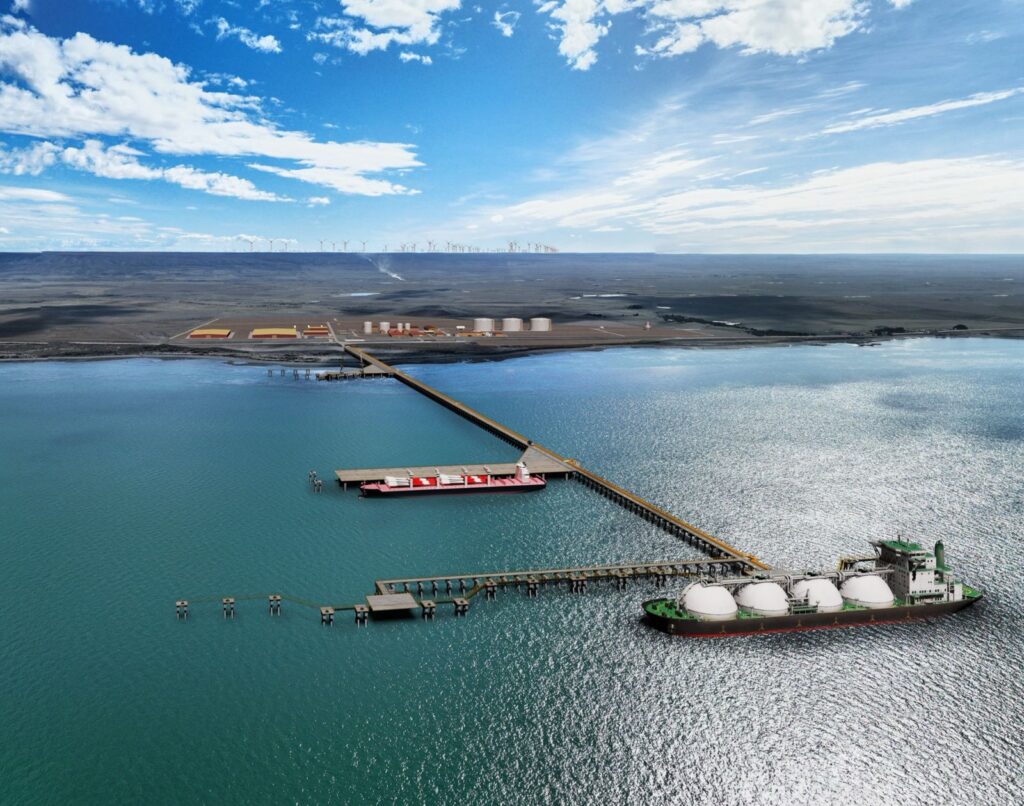
The complex, strategically located across the municipalities of San Gregorio, Punta Arenas, and Laguna Blanca, entails a large-scale infrastructure deployment designed to supply international markets starting in the second half of 2030. It includes a process plant for the synthesis of ammonia from green hydrogen, a marine desalination plant for water supply, underground pipelines, an initial wind farm of 194 turbines that will scale to reach a capacity of 2.1 gigawatts, and a dedicated multipurpose port for the shipment and reception of critical components.
In statements to H2 News, Marcos Kulka, CEO of H2 Chile, celebrated the project’s approval. “The unanimous approval by the Magallanes Environmental Assessment Commission (COEVA) represents an unprecedented milestone for the development of green hydrogen and its derivatives in Chile. This step demonstrates that it is possible to process highly complex megaprojects under the most demanding environmental standards, providing regulatory and technical certainty for long-term investments. Magallanes is now consolidating its position not only as a world-class wind energy hub, but also as a leading player in global decarbonization and the country’s sustainable development.”
With construction scheduled to begin in 2027, the project projects a workforce of up to 4,000 jobs during peak construction and approximately 1,800 permanent positions during its operational phase. This scale and the technical standard that its deployment entails place Magallanes at the epicenter of the energy agenda, immediately becoming one of the obligatory topics of conversation and analysis for the executives, suppliers and specialists who will converge between September 1 and 3 in the halls of Hyvolution.