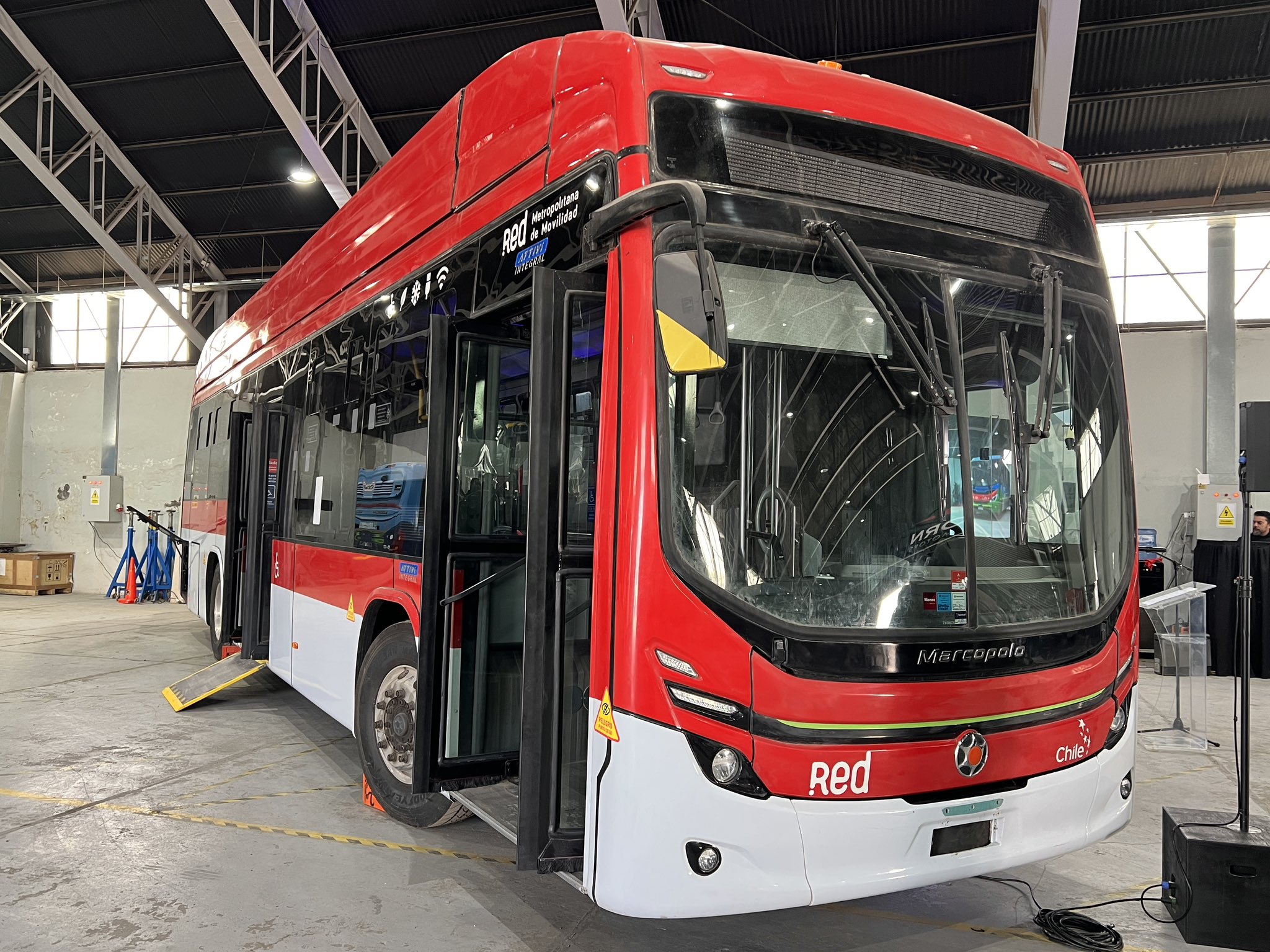
After successfully completing its assembly in Rancagua, this experimental prototype begins its technical tests with a view to driving on the streets of the capital in early 2027.
The quiet roar of electromobility, which has already transformed the streets of Santiago, is poised to usher in a new molecular revolution in Chilean public transportation. At the Reborn Electric Motors workshops in Rancagua, the assembly of the first hydrogen-powered bus to operate within the Red Movilidad system was successfully completed, a milestone marking another step in Chile’s entry into the forefront of second-generation clean fuels. The on-site inspection of this experimental prototype brought together a delegation of authorities, diplomats, and technicians who were able to closely examine this vehicle as it prepares for real-world urban operation.
“Once this process is complete, we will move on to the vehicle’s testing and registration phases, as well as its rigorous certification by the Vehicle Control and Certification Center (3CV)”, explained the Undersecretary of Transportation, Martín Mackenna, who led the technical visit along with the regional secretaries of energy from the O’Higgins, Metropolitan, and Valparaíso regions. “We expect to officially present this vehicle within the next few months, so that pilot programs can begin in early 2027, with its operation on different routes in the capital”, he added.
The incorporation of this technology places Santiago on a path of innovation shared by leading powers such as Japan and the United Kingdom, countries that already lead the way in the use of hydrogen-powered commercial fleets. In this regard, Undersecretary Mackenna emphasized that this experimental project aims to analyze on-site the potential benefits that hydrogen can bring to public transportation, once again positioning Santiago as a pioneering city in global sustainability. The official concluded by noting that the capital has already established itself as a leader in electromobility, with 60% of its bus fleet electric and more than 400 units deployed in other regions to raise the standard of service. Therefore, this step represents a new vanguard in the exploration of zero-emission technologies that will transform every corner of the country.
International cooperation has been a key driver of this deployment, combining funding and support from the Ministry of Energy, the European Union, and the German Federal Ministry for Economic Affairs and Energy, through the Team Europe project implemented by the GIZ cooperation agency; along with the Energy Sustainability Agency as the project’s coordinating entity. The analysis of these cutting-edge technologies, the challenges of their charging infrastructure, and the strategic alliances needed to expand their use will be central themes at Hyvolution Chile 2026, the region’s most important green hydrogen business event, which will take place from September 3 to 5 in Santiago.